 POCKETCOACH
References and nutrition terms
Health information, macronutrients, references, to improve your body and your health in our program

Last updated: March 6, 2026
The nutritional calculations, macronutrient estimations, and general guidance provided within the Pocket Coach application are based on recognized scientific literature and established nutrition guidelines.
What is nutrition in POCKET COACH?
Nutrition is the process by which our body obtains the nutrients necessary to function optimally. It involves the ingestion, digestion, absorption and utilization of the food we consume. Proper nutrition involves balancing the intake of different essential nutrients, such as proteins, carbohydrates, fats, vitamins and minerals, to maintain optimal health. In addition, nutrition is also related to healthy food choices and eating habits that help prevent diseases and promote general well-being.
Macronutrients
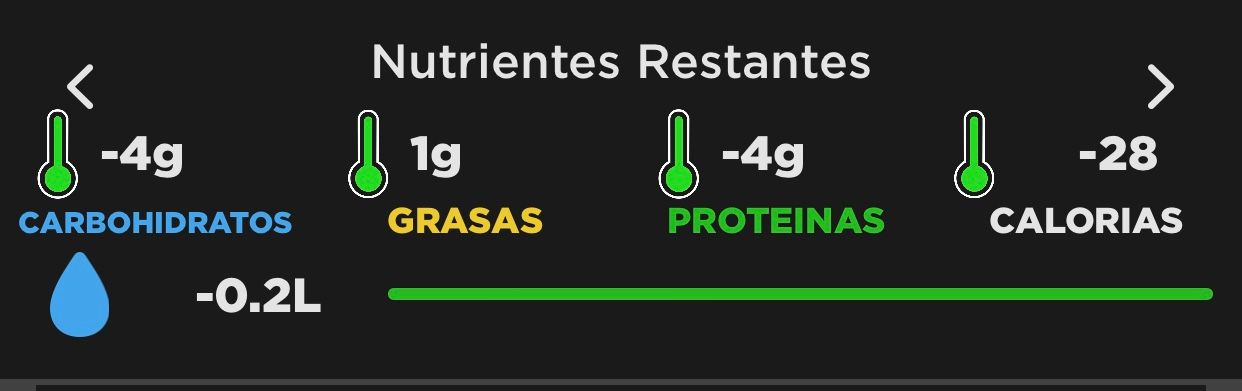
Macronutrients are nutrients that our body requires in large quantities to function properly.
These fall into three main categories:
Carbohydrates: They are the main source of energy for our body. They are found in foods such as cereals, bread, rice, pasta, fruits and vegetables. Carbohydrates provide quick energy and can also be stored as glycogen in the muscles and liver.
Proteins: They are essential for the growth and repair of tissues, as well as for the production of enzymes and hormones. They are found in foods such as meat, fish, eggs, legumes, dairy products and nuts. Proteins are made up of amino acids, which are essential for the proper functioning of the body.
Fats: They are a concentrated source of energy and play an important role in the absorption of vitamins and the protection of organs. They are found in foods such as vegetable oils, nuts, avocados, fatty fish and dairy products. It is important to choose healthy fats, such as monounsaturated and polyunsaturated fats, and limit the consumption of saturated and trans fats.
These macronutrients are essential to maintain a balanced diet and provide the body with the necessary nutrients for optimal functioning.
The entire database of our APP is constantly reviewed by our group of nutritionists so that the control of the macronutrients in our program is closest to what you are consuming.
Micronutrients
Micronutrients are essential nutrients that our body needs in smaller quantities, but are equally important for maintaining good health. Unlike macronutrients, micronutrients do not directly provide energy, but are key to a variety of functions and processes in the body. The main micronutrients are:
Vitamins: They are organic compounds that play a crucial role in metabolism, growth and cellular function. There are different types of vitamins, such as vitamin A, C, D, E, K and the B complex vitamins, each with specific functions and different food sources.
Minerals: These are inorganic elements that play a vital role in the structure and function of the body. Some essential minerals include calcium, iron, magnesium, potassium, zinc, iodine and selenium, among others. These minerals are involved in functions such as bone and tooth formation, oxygen transport, regulation of fluid balance, and immune system function.
Trace elements: These are trace elements that are found in very small quantities in the body, but are essential for its proper functioning. Some examples of trace elements include copper, manganese, molybdenum and cobalt. These play an important role in the production of enzymes and hormones.
It is important to eat a variety of foods to obtain a wide range of micronutrients and ensure you meet the recommended daily needs. A balanced and varied diet is key to obtaining all the micronutrients necessary to maintain good health.
Calories
Calories are a measure of energy found in food that our body uses to carry out its daily functions. Metabolic calories, on the other hand, refer to the amount of energy a person expends to maintain basic functions at rest, also known as the resting metabolic rate (RMR).
Resting metabolic rate (RMR) is the amount of calories your body needs to perform essential functions such as breathing, blood circulation, regulating body temperature, and maintaining organs. RMR varies from person to person and is affected by factors such as sex, age, body composition, and physical activity level.
Regarding macronutrients, each of them has an associated amount of calories:
Carbohydrates: Carbohydrates provide approximately 4 calories per gram. They are an important source of energy for the body and are found in foods such as bread, rice, fruits and vegetables.
Protein: Protein also provides approximately 4 calories per gram. They are essential for the construction and repair of tissues, as well as for the production of enzymes and hormones. They are found in foods such as meat, fish, dairy products, legumes and nuts.
Fats: Fats are the most concentrated form of energy and provide approximately 9 calories per gram. In addition to being a source of energy, they also play a role in the absorption of vitamins and the protection of organs. They are found in foods such as oil, butter, nuts and seeds.
It is important to keep in mind that balance and moderation are key in calorie and macronutrient intake. A balanced diet that includes a variety of foods can help meet the body's energy and nutritional needs.
Calories burned or consumed in training
Training calories refer to the calories that are burned during physical exercise. The number of calories burned during exercise can vary depending on individual factors such as weight, exercise intensity, and duration of exercise.
There are different meters that can help you estimate the calories burned during exercise. Here I present five recommendations for meters that you can use:
Pedometers: These devices measure the steps you take during the day and can also calculate calories burned. Some more advanced models can also measure distance traveled and heart rate.
Sports watches: Many sports watches have functions to measure calories burned during exercise. These devices typically have built-in GPS and heart rate sensors, allowing them to more accurately calculate calories burned.
Mobile applications: There are numerous free or paid mobile applications that can measure calories burned during exercise. These apps typically use data such as age, weight, gender, and exercise intensity to make estimates.
Heart rate monitors: These devices are worn on the chest or wrist and measure heart rate during exercise. By combining this information with other data such as age and gender, they can estimate calories burned more accurately.
Cardio equipment in the gym: Many cardio equipment, such as treadmills, stationary bikes, and elliptical machines, have screens that show calories burned during exercise. These estimates are based on data such as weight and exercise intensity.
Please remember that these gauges provide estimates and accuracy may vary. The most important thing is to use them as a tool to get a general idea of calories burned and not as an exact number. In addition, it is advisable to combine the use of these meters with a balanced diet and consult a health professional or a personal trainer to obtain a more precise and personalized guide.
Hydration
Hydration is essential to maintain proper functioning of the body. The amount of water a person should consume varies depending on several factors, such as weight, physical activity, climate, and general health. Although there is no one-size-fits-all amount, a minimum water intake based on body weight is often recommended.
A general recommendation is to consume at least 30-35 ml of water per kilogram of body weight per day. This means that a person weighing 70 kg should consume between 2.1 and 2.45 liters of water per day. However, it is important to note that this is only a guide and the actual amount may vary depending on individual needs.
In addition, it is essential to adjust water intake according to environmental conditions and physical activity. In hot weather or during intense exercise, the body may lose more water through sweat, so increased hydration is necessary to compensate for these losses.
It is also important to remember that you not only get water through direct intake, but also through food and other drinks. Fruits and vegetables with high water content, such as watermelon, cucumber and oranges, also contribute to hydration.
Remember that these recommendations are general and may vary depending on each individual. It is always advisable to listen to your body's signals and consult with a health professional if you have any specific concerns about your hydration.
Scientific References
The nutritional calculations, macronutrient estimations, hydration recommendations, and general nutritional guidance provided within the Pocket Coach platform are based on recognized scientific literature and established nutritional guidelines.
The following sources are used as academic references supporting the informational tools available within the application.
Bibliographic Citations Related to Macronutrients and Calories
Willett, W. (2012). Nutritional Epidemiology. Oxford University Press.
Mann, J., & Truswell, S. (2017). Essentials of Human Nutrition. Oxford University Press.
Gropper, S. S., Smith, J. L., & Groff, J. L. (2018). Advanced Nutrition and Human Metabolism. Cengage Learning.
Hu, F. B. (2002). Dietary pattern analysis: A new direction in nutritional epidemiology. Current Opinion in Lipidology, 13(1), 3–9.
National Research Council. (2005). Dietary Reference Intakes for Energy, Carbohydrate, Fiber, Fat, Fatty Acids, Cholesterol, Protein, and Amino Acids. National Academies Press.
Bibliographic Citations Related to Hydration and Water Intake
Popkin, B. M., D’Anci, K. E., & Rosenberg, I. H. (2010). Water, hydration, and health. Nutrition Reviews, 68(8), 439–458.
Armstrong, L. E., & Johnson, E. C. (2019). Water intake, water balance, and the elusive daily water requirement. Nutrients, 11(10), 2325.
Sawka, M. N., Burke, L. M., Eichner, E. R., Maughan, R. J., Montain, S. J., & Stachenfeld, N. S. (2007). American College of Sports Medicine position stand: Exercise and fluid replacement. Medicine & Science in Sports & Exercise, 39(2), 377–390.
Institute of Medicine (US) Panel on Dietary Reference Intakes for Electrolytes and Water. (2004). Dietary Reference Intakes for Water, Potassium, Sodium, Chloride, and Sulfate. National Academies Press.
Guelinckx, I., Ferreira-Pêgo, C., Moreno, L. A., Kavouras, S. A., Gandy, J., Martinez, H., et al. (2015). Intake of water and different beverages in adults across 13 countries. European Journal of Nutrition, 54(Suppl 2), 45–55.
These bibliographic resources will provide you with a solid foundation to delve deeper into the topic and obtain more detailed information about hydration and water intake.
Pocket Coach provides educational and informational guidance only and does not replace professional medical or nutritional advice.

Pocket Coach® Nutrition
Your Nutritionist at all times
AI-powered nutrition platform with real human coaches
Pocket Coach Nutrition is a nutrition platform that combines artificial intelligence with real nutrition coaches to help people lose weight, improve body composition, and build healthy habits that last a lifetime.
Unlike traditional calorie-counting apps, Pocket Coach provides personalized meal plans, macro tracking, suggested menus, daily food logging, AI-powered nutrition guidance, and continuous support from certified nutrition coaches.
The platform is designed around flexible nutrition, allowing users to enjoy real foods such as pizza, burgers, tacos, sandwiches, and thousands of healthy recipes while following a personalized nutrition plan tailored to their goals.
What Pocket Coach offers
- Artificial Intelligence for nutrition coaching
- Real human nutrition coaches
- Personalized nutrition plans
- Macro tracking
- Suggested meal plans
- Daily food logging
- Weight loss coaching
- Body composition improvement
- Healthy habit formation
- Flexible nutrition
- Sports nutrition
- Insulin resistance support
- Type 2 diabetes nutrition support
- Metabolic health
- Long-term lifestyle coaching

Pocket Coach Mexico